The Shipwrecks You Can See Without Scuba Gear in the Manitou Passage
In spring 2015 a Coast Guard crew flew over the Manitou Passage and the water was clear enough to count ribs. Here's where those wrecks sit and how close you can get without scuba gear.
- Published
- Read
- 8 min
- Comments
- Be the first to comment
In this story
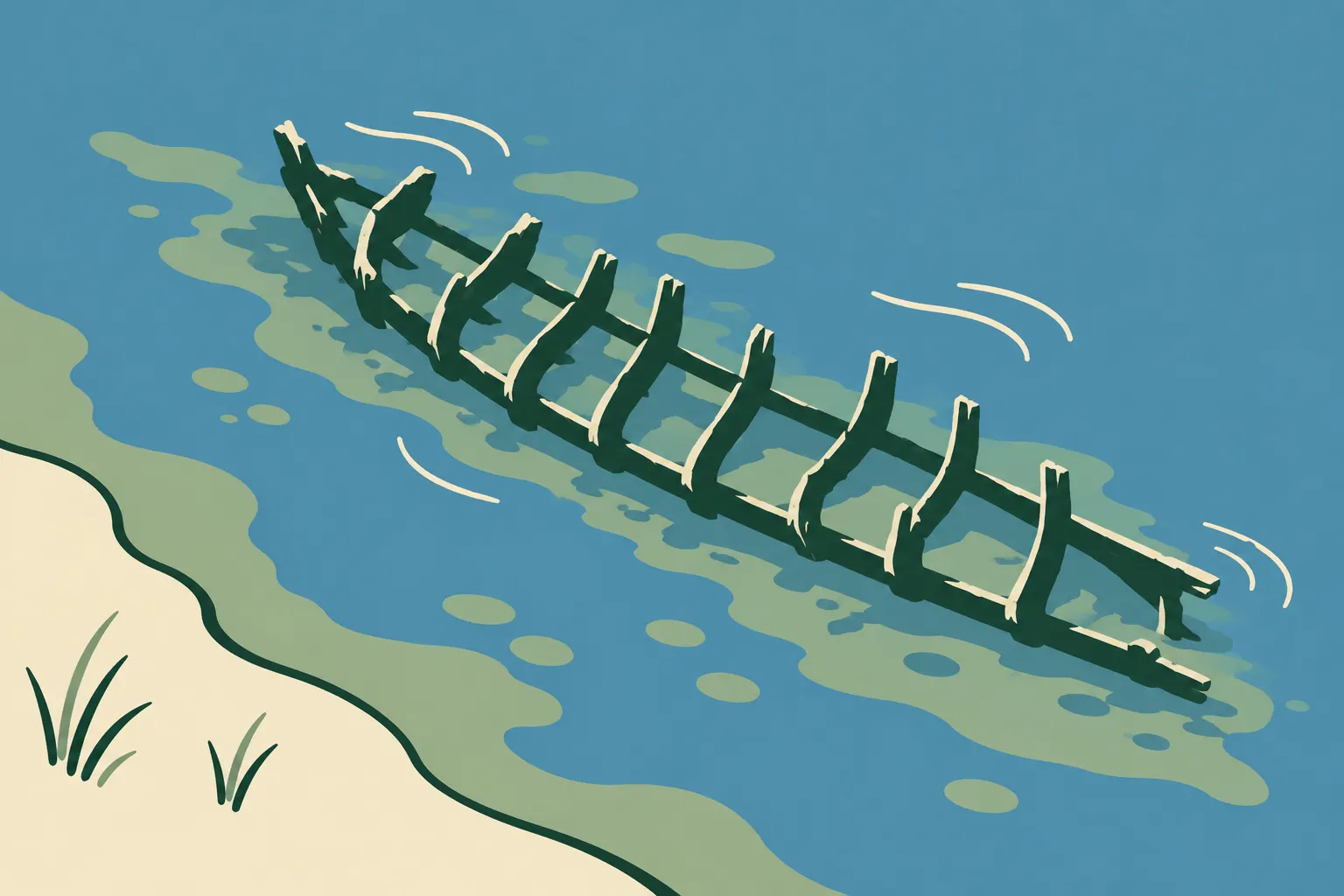
In April 2015, an aircrew from Coast Guard Air Station Traverse City flew a routine spring patrol over the Manitou Passage in northern Lake Michigan. The winter ice had just cleared, leaving the turquoise water calm and clear. Looking down from their helicopter, the crew spotted shadowed silhouettes resting on the sandbars beneath the surface: wooden ribs, iron boilers and intact keels.
The photos went viral, and outlets from Smithsonian to the AP marveled at the “ghostly” hulls. Among the wrecks in those photographs was the Rising Sun resting just north of Pyramid Point.
Between the mainland bluffs of Sleeping Bear and the offshore islands of North and South Manitou lies the 16-mile marine channel known as the Manitou Passage. In the 1800s and early 1900s, this passage was a major shipping route. The passage saved some 60 to 70 miles of open-lake sailing and offered natural harbor protection behind the islands during bad weather.
Ships crowded the passage, from schooners loaded with lumber from the north woods to steamers carrying grain from Chicago, and at times harbors like Glen Haven were clogged with hundreds of vessels. But when severe storms swept down the lake, the passage turned hazardous. Shifting shoals, blinding squalls and gale-force winds claimed dozens of ships: archaeologists have found at least 60 wrecks here, and more remain lost.
Today, the Manitou Passage State Underwater Preserve protects these maritime graves. While some lie deep enough to need serious dive gear, several of the preserve’s most famous ships sit in shallow water where you can glimpse them from island trails, spot them through the water from a kayak or explore them with a mask and snorkel.
Before you go: Dock access and Leland ferry service to South Manitou depend on the park’s schedule and repairs, so check the park’s South Manitou page before you plan a trip.
1. The Francisco Morazán (1960)
- Status: Partly above water; broken, rusting hull resting in up to about 20 feet of water.
- Location: About 300 yards off the south shore of South Manitou Island.
- How to See It: Once you’re on the island, it’s about 2.5 miles from the dock to the south shore shipwreck overlook. (The island’s Old Growth Cedars grove is a short 0.3-mile add-on trail past the shipwreck turn-off.)
The 246-foot Liberian-flagged freighter Francisco Morazán left Chicago on Nov. 27, 1960, bound for Rotterdam and Hamburg. Her holds carried 1,118 tons of cargo, including baled hides, scrap aluminum, machinery, canned chicken, toys and empty shampoo bottles.
Fog and a failing boiler feed pump had already slowed her progress when a fierce late-November snowstorm hit the northern lake with northwest winds near 40 mph and 10- to 12-foot waves. Blinded by snow on the night of Nov. 28, she was pushed off course and ran aground on a sand shoal about 300 yards off South Manitou’s south beach.
The Coast Guard airlifted the captain’s pregnant wife, Anastasia, to the icebreaker Mackinaw. The captain and his crew remained aboard until Dec. 4, when worsening conditions finally forced them to abandon ship.
By coincidence, the Morazán ran aground directly over the submerged hull of the Walter L. Frost, a 235-foot wooden steamer that had stranded on the exact same shoal 57 years earlier on Nov. 4, 1903.
Today, the Morazán’s rusted upper works still stand above the surf, though storms and ice are gradually breaking the hull apart. Cormorants and gulls nest on her exposed decks; the National Park Service asks visitors to avoid that section because it’s a nesting area.
2. The Rising Sun (1917)
- Status: Submerged in 6 to 12 feet of water; boiler, iron strapping and timbers on the bottom.
- Location: Just offshore, north of Pyramid Point (mainland Sleeping Bear Dunes).
- How to See It: Don’t try to climb down from the Pyramid Point lookout; the NPS asks visitors not to descend the bluff for personal safety and erosion control. On calm, clear days the wreck shows beneath the waves off Pyramid Point, and the best look is from a kayak or paddleboard launched from a legal mainland beach access point.
The Rising Sun was a 133-foot wooden passenger and freight steamer owned by the House of David, the communal religious society based in Benton Harbor. On Oct. 29, 1917, she was bound for Benton Harbor from High Island in the Beaver Island archipelago with 32 people aboard and a hold full of potatoes and other island produce, plus lumber.
A sudden snowstorm struck the passage after midnight. Near Pyramid Point, she struck a rock on the shoal in the heavy seas, and the impact broke off her rudder, leaving the ship impossible to steer. Waves pushed her onto the reef, where breakers began tearing at the wooden hull.
Passengers and crew took to the ship’s lifeboats. One capsized in the surf, but with help from Port Oneida farmer Fred Baker, who phoned for assistance, and the Coast Guard crew from the Sleeping Bear Point station, everyone made it ashore. The next morning rescuers realized one elderly passenger had slept through the entire evacuation and was still aboard the stranded ship; he was taken off safely without injury, and not a single life was lost.
The surf broke her up. Today her timbers, iron strapping and rusting boiler rest on the sand about 12 feet down, and on calm, clear days you can make them out from a kayak or paddleboard.
3. The Three Brothers (1911)
- Status: Submerged in 5 to 45 feet of water, sloping from near shore into deeper water.
- Location: Off Sandy Point, a short beach walk south of the South Manitou dock.
- How to See It: In clear water it’s an easy snorkel from the beach, and it ranks as the most popular dive site in the preserve.
Built in 1888, the Three Brothers was a 162-foot wooden steam barge. On Sept. 27, 1911, loaded to the gunwales with lumber from Boyne City bound for Chicago, her aging hull began to leak badly in heavy seas.
Water poured in so fast that her fireman stood waist-deep in the engine room to keep the engines running at full speed. Realizing the ship was sinking beneath them, the captain steered her hard toward South Manitou Island to beach her before she plunged into deep water.
She drove ashore at Sandy Point. All 13 crew made it off safely, assisted by South Manitou lifesavers stationed just down the beach.
For 85 years, shifting sand completely buried the hull. Then, in April 1996, park staff discovered that Sandy Point itself had shifted with the currents, exposing the wreck nearly intact. Today, snorkelers and divers can follow her sand-filled hull from the broken bow near the shallows out to the intact stern as it slopes into deeper blue water.
4. The Jennie and Annie (1872)
- Status: Keel timbers and structural frames periodically exposed on the beach.
- Location: The shoreline north of Empire Beach toward North Bar Lake.
- How to See It: Walk the shoreline north of Empire Beach toward North Bar Lake, especially after strong fall and winter blows reshape the sand.
On Nov. 12, 1872, the schooner Jennie and Annie, hauling corn from Chicago to Buffalo, was caught in a violent November gale on Lake Michigan. Blown toward the mainland, she was driven ashore just north of Empire.
The breakers tore the wooden schooner apart in the surf. Of her crew of 10, only three made it ashore.
When powerful storms rake the shore between Empire and Sleeping Bear Point and rearrange the beach sands, her heavy structural timbers periodically emerge from the surf. When visible, you’re looking at timbers shaped by axes in 1863, in the middle of the Civil War, for John Kelderhouse, brother of Port Oneida founder Thomas Kelderhouse.
Manitou Passage Field Guide
| Wreck | Year Lost | Vessel Type | Water Depth | Best Viewing Access |
|---|---|---|---|---|
| Francisco Morazán | 1960 | Steel Freighter | Surface to ~20 ft | South Manitou trail overlook |
| Walter L. Frost | 1903 | Wooden Steamer | 10–12 ft | Submerged directly beneath the Morazán |
| Rising Sun | 1917 | Wooden Steamer | 6–12 ft | Kayak or paddleboard off Pyramid Point (do not descend bluff) |
| Three Brothers | 1911 | Lumber Steam Barge | 5–45 ft | Snorkel off Sandy Point beach |
| Jennie and Annie | 1872 | Wooden Schooner | Surf line | Beachcombing north of Empire toward North Bar Lake |
Rules of the Preserve: Look and Leave It
When exploring shipwreck sites around Sleeping Bear Dunes and the Manitou Passage, keep three safety and legal standards in mind:
- State and Federal Law Protects Every Timber: Under Michigan’s bottomlands law (Part 761 of NREPA), and federal regulations inside the National Lakeshore, it is strictly illegal to remove, alter or destroy anything from a shipwreck without a permit. That applies equally to brass hardware underwater and weathered timbers lying on the beach. Penalties range from misdemeanor fines to felony charges.
- Watch Lake Conditions Closely: Lake Michigan can go from glassy calm to steep, breaking chop very quickly. If you kayak or paddleboard out to shallow wrecks like the Rising Sun, always wear a life jacket, check marine forecasts beforehand and keep a safe distance from jagged, rusted iron plates in breaking surf.
- Respect Working History: These wrecks mark the working lives of sailors who faced brutal conditions on open freshwater to build the towns and cities of the Midwest. Treat each site with care and leave every timber exactly as you find it.
The first Fits Like A Mitten tees are on the way. Join the list to hear the day the founding drop opens.

Pass it along
Send this digital postcard to a friend.
We’ll email them the card, your note and a link to the story. No stamp needed, and nobody gets added to a list.



Comments